


Peptides Safety: Are They Safe for Long-Term Use?
Are peptides safe for long-term use? The honest answer is: it depends entirely on which peptide, its quality, the dose, and medical oversight — and for most research peptides, long-term human safety data simply do not exist yet. This guide separates FDA-approved peptides from research peptides, explains why sourcing and purity dominate real-world risk, and gives you a framework for evaluating safety honestly.
Editorial & research disclaimer: This article is for educational purposes only and is not medical advice. It discusses both FDA-approved peptide medications and research-only peptides; the latter are not approved for human use in most jurisdictions. Always consult a licensed healthcare professional before starting or continuing any peptide.

Quick Answer
Are peptides safe long-term? It depends on the specific peptide. FDA-approved peptide medications (such as certain GLP-1 peptide-based drugs) have undergone clinical trials and have defined long-term safety profiles when used as prescribed. Research-only peptides generally do not have large long-term human safety data, so their long-term risk is genuinely unknown. “Generally safe” is not the same as “risk-free.”
In practice, the biggest controllable risks are sourcing and purity — contaminated, mislabeled, or truncated peptides cause far more harm than the molecules themselves. Quality verification plus medical oversight is the real safety strategy for anyone considering peptide therapeutics or peptide therapy.
“Are peptides safe?” has no single answer — it depends on the peptide, dose, quality, and oversight.
FDA-approved peptides have trial-based long-term safety data; research peptides largely do not.
Sourcing is the #1 real-world risk: contaminants, mislabeling, and truncated sequences harm more than the peptide itself.
Verify purity: a batch-matched COA with 99%+ HPLC purity and third-party testing is non-negotiable.
Oversight matters: a clinician can screen for contraindications, interactions, and monitor long-term use.
The Core Question: Are Peptides Safe for Long-Term Use?
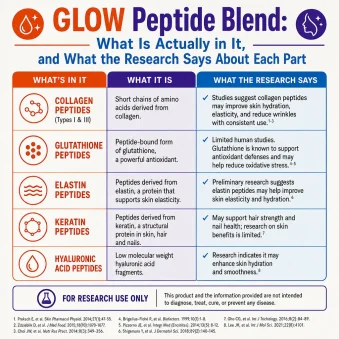
Peptides are not a single thing, but rather short chains of amino acids or longer polypeptides like collagen peptides or synthetic peptides, so they cannot have a single safety rating. The category spans FDA-approved medicines with decades of data, newer approved drugs with growing long-term evidence, and a large gray market of research-only compounds—often marketed for skin health, anti-aging and longevity or sold as dietary supplements and peptide supplements—which raise significant safety concerns due to little to no human safety data. The right question is never “are peptides safe?” but “is this peptide, at this dose, from this source, safe for this person, over this timeframe?”
“Generally safe” does not mean “completely risk-free.” Long-term safety depends on several interacting variables:
- The specific peptide, such as GHK-Cu used for skin health, and how well it is studied in humans.
- Dose and frequency, and whether the body's feedback systems adapt over time.
- Product quality — purity, identity, sterility, and absence of contaminants.
- Individual health, including conditions like autoimmune disorders, immune function, medications, and risk factors.
- Medical supervision and monitoring over the duration of use.

FDA-Approved Peptides vs Research Peptides
The single most important safety distinction is regulatory status. FDA-approved peptide medications have passed clinical trials demonstrating acceptable safety and efficacy for specific uses, and they are manufactured under strict pharmaceutical controls. Research peptides are sold for laboratory use only; they have not been evaluated by the FDA for human safety, and their manufacturing is not subject to the same oversight.
| Factor | FDA-Approved Peptides | Research Peptides |
|---|---|---|
| Human trials | Yes — efficacy & safety established | Usually none or preclinical only |
| Long-term safety data | Defined for approved uses | Generally unknown |
| Manufacturing oversight | Pharmaceutical GMP, regulated | Variable; buyer must verify |
| Labeling | Approved indications & dosing | Research use only |
| Real-world risk driver | Use outside guidance | Sourcing & purity |
Sourcing Matters: Pharmaceutical Grade vs Research Grade
For research peptides, the gray market is the real hazard. Pharmaceutical-grade material is made and tested to strict standards; research-grade quality varies enormously between vendors. A surprising amount of “peptide danger” actually traces back to product problems rather than the molecule itself.
- Contaminants: endotoxins, solvents, or heavy metals from sloppy manufacturing.
- Mislabeling: wrong peptide, wrong concentration, or wrong identity entirely.
- Truncated sequences: incomplete chains from poor synthesis or purification.
- Degradation: potency loss from ambient (non-cold-chain) shipping and storage.
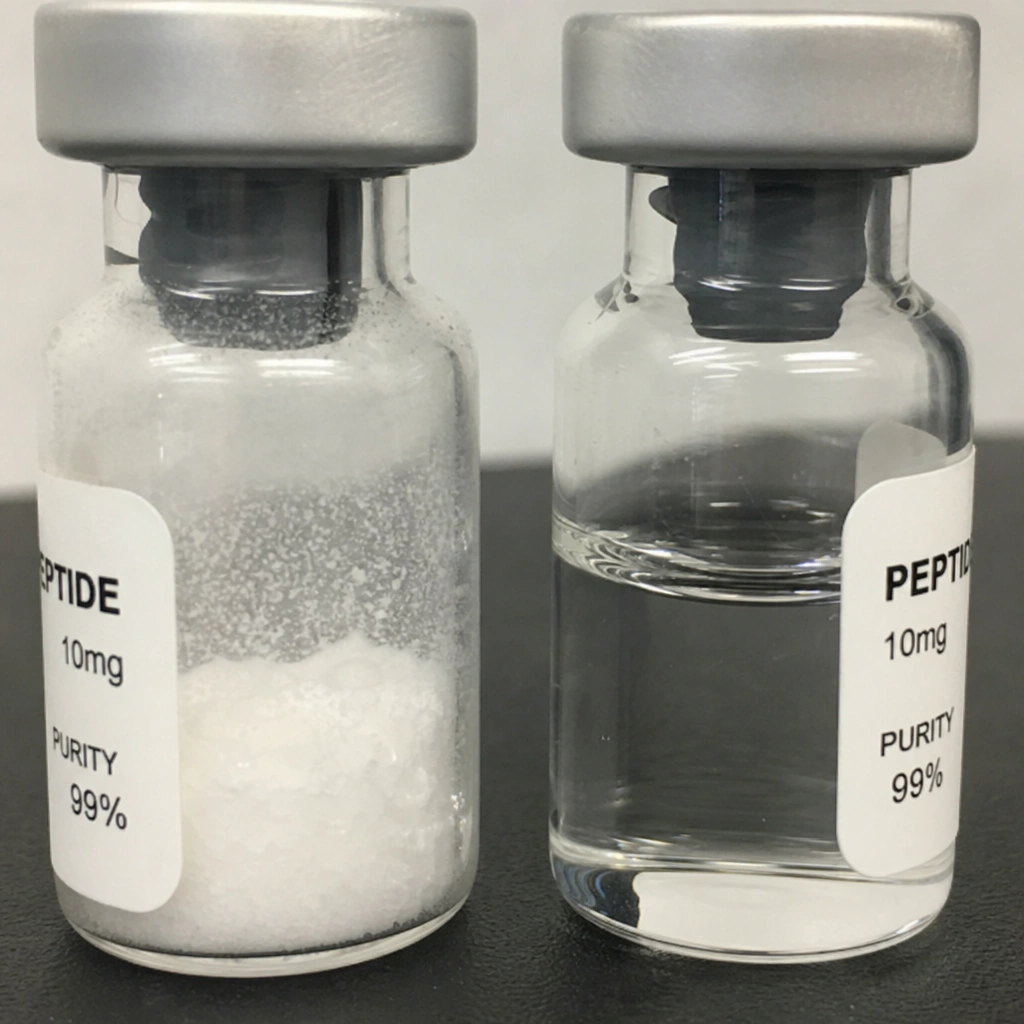
How to Verify Peptide Purity and Quality
Whatever peptide you are evaluating, the verification checklist is the same — and it is the most powerful safety tool a buyer has:
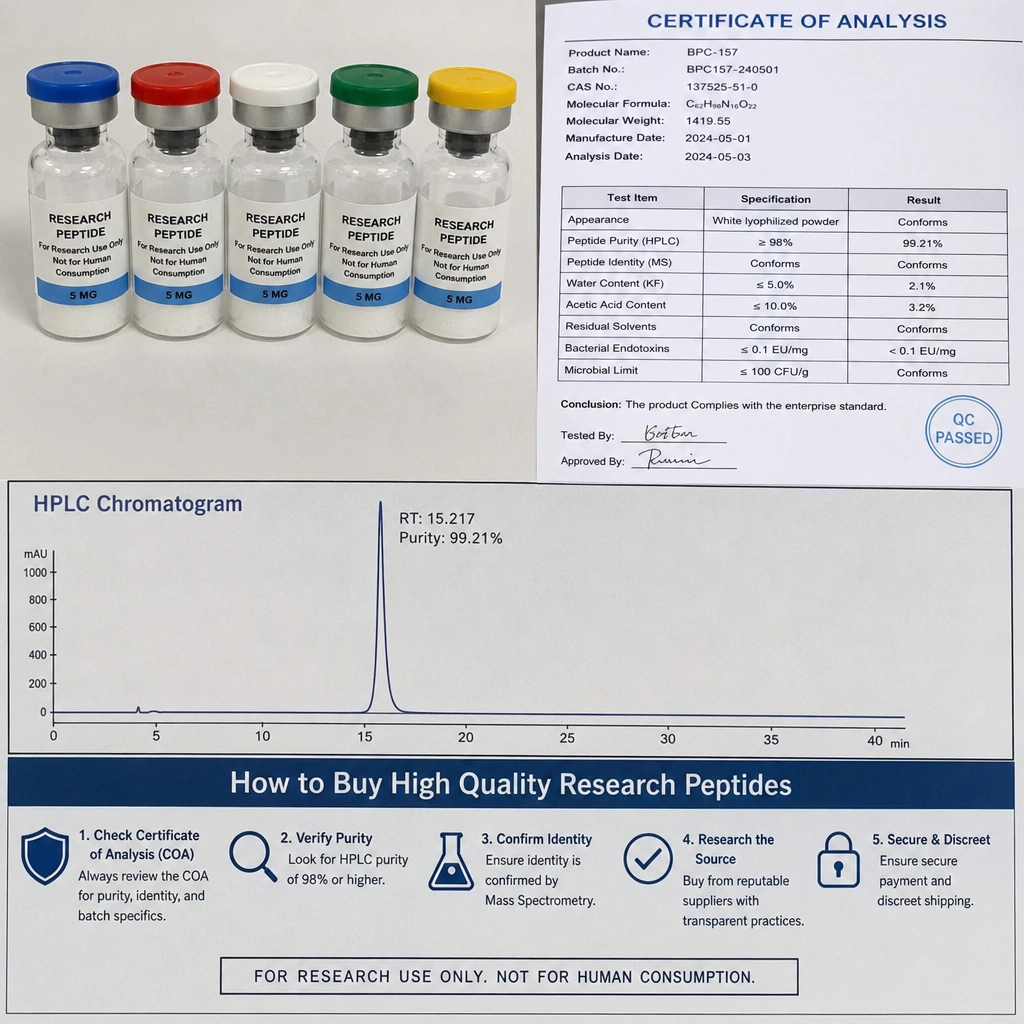
- 99%+ HPLC purity documented on a batch-specific Certificate of Analysis.
- Identity confirmation by mass spectrometry matching the labeled sequence.
- Independent third-party lab named on the COA, with a recent test date.
- Batch/lot number on the vial that matches the COA exactly.
- Endotoxin/sterility data for anything intended for injection in research.
Use a reconstitution calculator to handle research solutions accurately, and treat any missing or vague documentation as a reason to walk away.

Delivery, Side Effects, and Specific Categories
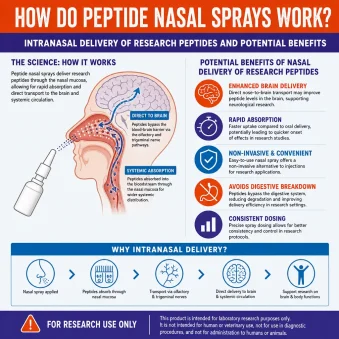
Safety also varies by how a peptide is delivered and by category. Injectables carry site-related risks (irritation, allergic reactions, immunogenic reactions, or infection if technique is poor) but high bioavailability; while peptide injections offer efficiency, nasal and oral routes reduce those risks but change absorption. A few category notes:
- GLP-1 receptor agonists (weight loss): approved versions like Ozempic and Wegovy have well-characterized side effects (nausea, GI effects) and defined long-term data; research copies do not.
- Growth-hormone secretagogues: compounds like CJC-1295 and Ipamorelin can affect water retention, blood sugar, and hormones, potentially leading to hormonal imbalances; limited long-term human data.
- Healing peptides (BPC-157, TB-500): often researched for muscle growth, increasing muscle mass, fat loss, joint pain, wound healing, and tissue repair, these have mostly animal data; human long-term safety is unestablished.
- Always individualize: existing chronic conditions and medications change the risk calculus.
The throughline: long-term safety is strongest where human trials exist, and weakest where they do not — so match your confidence to the evidence.
Make peptide safety a verification habit.
PrymaLab publishes transparent, batch-specific COAs and ships cold-chain so quality is one less unknown in your research.
Explore the Research HubFrequently Asked Questions
Are peptides safe for long-term use?
It depends on the specific peptide. FDA-approved peptide medications have clinical-trial-based long-term safety profiles when used as prescribed, while most research-only peptides lack large human safety data, so their long-term risk is unknown. “Generally safe” is not the same as “risk-free,” and dose, quality, and oversight all matter.
What is the difference between FDA-approved and research peptides?
FDA-approved peptides have passed human clinical trials for specific uses and are made under pharmaceutical-grade manufacturing controls. Research peptides are sold for laboratory use only, have not been evaluated by the FDA for human safety, and are not subject to the same manufacturing oversight, so buyers must verify quality themselves.
What is the biggest safety risk with research peptides?
Sourcing and purity, not the molecule itself. Contaminants, mislabeling, wrong concentrations, and truncated sequences from poor manufacturing cause much of the real-world harm attributed to peptides. Verifying a batch-matched COA with 99%+ HPLC purity and third-party testing dramatically reduces this risk.
How do I verify a peptide is high quality?
Check for 99%+ HPLC purity on a batch-specific Certificate of Analysis, mass-spec identity confirmation, a named independent third-party lab with a recent test date, and a lot number that matches your vial. For injectables in research, look for endotoxin and sterility data. Missing documentation is a reason to walk away.
Do peptides have side effects, such as headaches?
Yes, and they vary by peptide and dose. Approved GLP-1 drugs commonly cause nausea and GI effects; growth-hormone secretagogues can affect water retention, fatigue, glucose, and insulin sensitivity. For research peptides, side-effect profiles—including potential impacts on sexual function—are often poorly characterized in humans, which is part of why medical oversight and conservative exposure matter.
Are injectable peptides more dangerous than oral or nasal?
Each route has trade-offs. Injectables offer high bioavailability but carry site-related risks like irritation or infection if technique is poor. Nasal and oral routes lower those risks but change absorption and effectiveness. None is automatically “safe”; technique, sterility, and product quality drive the real risk.
Can long-term peptide use be monitored safely?
For approved peptides used under medical care, yes — a clinician can monitor labs, side effects, and dosing over time. For research peptides there is no established monitoring framework and limited human data, so any long-term use is inherently more uncertain. Professional oversight and quality verification are the key safeguards.
Are weight-loss peptides safe long-term?
Approved GLP-1 receptor agonists have defined long-term safety data when prescribed and monitored, including known side effects. Research-grade or gray-market copies do not share that evidence base or manufacturing oversight, so their long-term safety is unknown. For therapeutic weight loss, work with a licensed clinician and a regulated pharmacy.
References & Further Reading
- U.S. Food and Drug Administration. Information on approved peptide drug products and compounding. FDA.gov. Accessed 2026.
- Wilding, J.P.H., et al. (2021). Once-weekly semaglutide in adults with overweight or obesity. New England Journal of Medicine, 384, 989–1002.
- Lau, J.L., & Dunn, M.K. (2018). Therapeutic peptides: historical perspectives and trends. Bioorganic & Medicinal Chemistry, 26(10), 2700–2707.
- United States Pharmacopeia. General Chapter <1225>: Validation of Compendial Procedures (HPLC principles).
- Sigalos, J.T., & Pastuszak, A.W. (2018). The safety and efficacy of growth hormone secretagogues. Sexual Medicine Reviews, 6(1), 45–53.
PrymaLab resources: Research Hub · Research peptides · Peptide calculator · FAQ · Shipping policy.
Final disclaimer: This article is for educational purposes only. Peptides and the other compounds discussed are sold for research purposes only and are not approved by the FDA or comparable agencies for human therapeutic use. Statements about their effects have not been evaluated by the FDA.
Always consult a licensed healthcare professional before starting any new health protocol, and verify the legal status of any compound in your jurisdiction. PrymaLab does not endorse any specific third-party peptide vendor mentioned in this article and assumes no responsibility for third-party products.